


Product Summary (Registration No.178)
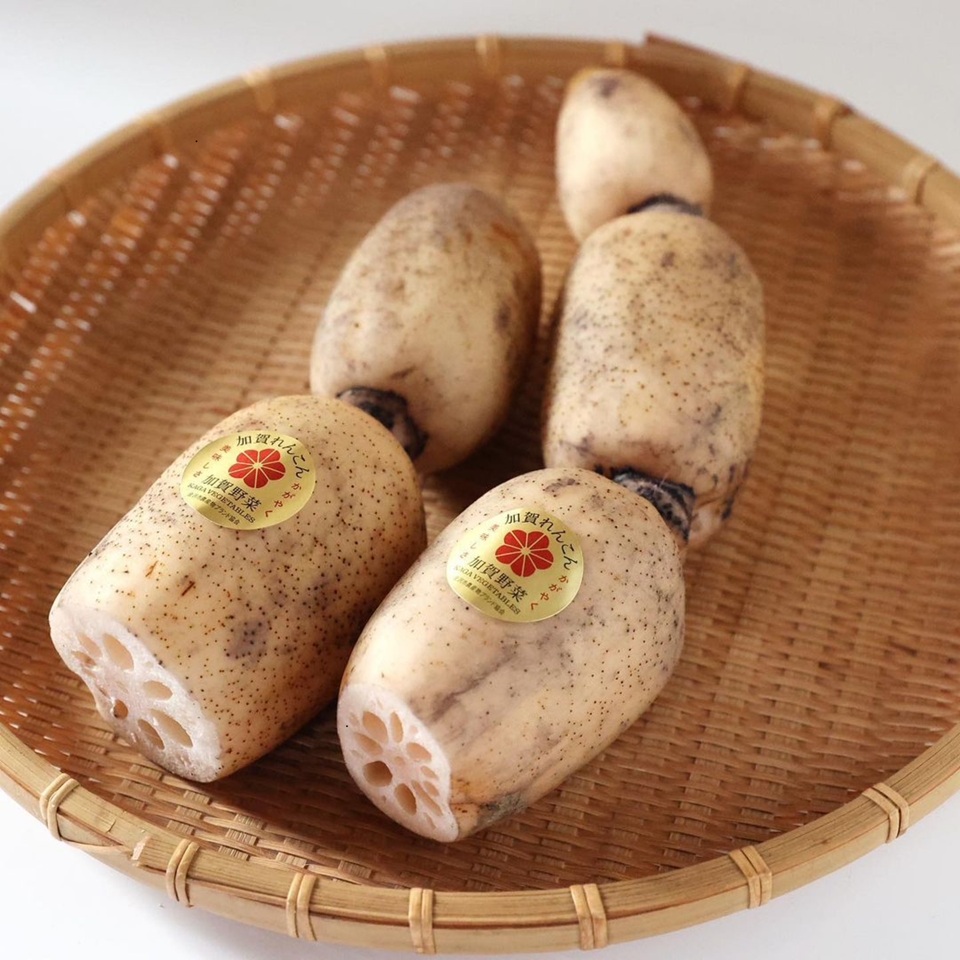
Registration No.178 加賀れんこん
Registered name (Transcription) : 加賀れんこん(Kaga Renkon), Kaga Lotus RootReference information : Kaga Lotus Root
Category of product
Class 1 : Agricultural product(Lotus Root)Production Area
Kanazawa City and Kahokugata Reclaimed Land, Ishikawa PrefectureRegistered Group
JA Kanazawa City Kaga Renkon Producers’ GroupCharacteristics
Kaga Renkon has thick flesh and a high starch content. When grated, it is so sticky that it forms a dumpling-like mass without a binding agent. Its stickiness increases further from autumn through winter, so it has a crisp texture in summer and a chewy texture in winter. It has become an essential ingredient in local dishes such as hasu-mushi and surinagashi-jiru. In addition to its excellent eating quality, Kaga Renkon exhibits considerable sabi, or darkening of the skin, which is regarded as an indication of freshness. Its long shelf life and stable supply system are also highly regarded by market professionals, and it commands higher prices than ordinary lotus root.Link with the Production Area
The production area receives abundant rainfall and has extensive areas of heavy clay soil in which a person’s feet can become so deeply stuck that they cannot be pulled free once they step into a field. These conditions are suitable for cultivating lotus root, which requires large amounts of water and soil with high water-retention capacity. Kaga Renkon is said to have originated approximately 300 years ago, when Tsunanori Maeda, lord of the Kaga Domain, brought seedlings back from Mino during an alternate-attendance journey and planted them within Kanazawa Castle. Developed through many years of improvement, Kaga Renkon is one of the Kaga vegetables. It is eaten as an auspicious food and is deeply rooted in the region’s food culture.Contact
Intellectual Property Division, Food Industry Affairs Bureau,
Ministry of Agriculture, Forestry and Fisheries
1-2-1 Kasumigaseki, Chiyoda-ku, Tokyo 100-8950, Japan
Tel: +81-3-6744-2062


