


[Event Report] Workshop Held on ‘Innovative Japanese Technologies and Approaches Contributing to Regenerative Agriculture and Sustainable Soil Conservation’
~ Kick-off of Global Deployment through Private-Public Partnerships toward UNCCD COP17 in 2026 ~
[Key Points]
On Thursday, the 12th of March, 2026, the Ministry of Agriculture, Forestry and Fisheries (MAFF) held the ‘Workshop on Innovative Japanese Technologies and Approaches Contributing to Regenerative Agriculture and Sustainable Soil Conservation’ to address global challenges such as soil degradation and climate change.
The workshop brought together representatives from advanced domestic companies and research institutions, as well as major international organisations, including the United Nations Environment Programme (UNEP), the United Nations Development Programme (UNDP), the United Nations Industrial Development Organization (UNIDO), and the Secretariat of the United Nations Convention to Combat Desertification (UNCCD).
The participants discussed how to deploy Japan's innovative technologies in the field in developing countries, including applicable schemes, in a highly practical and constructive manner.
Going forward, we plan to aim for the global deployment of Japanese technologies through strong public-private efforts, utilising opportunities such as hosting a side event at the 17th Session of the Conference of the Parties to the UNCCD (COP17) to be held in Mongolia this August.
1. Background: Why Regenerative Agriculture and Soil Conservation Now?
Land degradation countermeasures, including the conservation of agricultural soil (SDGs Goal 15 ‘Life on Land’), have become urgent and important issues worldwide, including in Africa, Latin America, and Southeast Asia.
Sustainable Land Management (SLM) is rapidly gaining international attention as a ‘nexus’ that directly contributes to both climate change mitigation and biodiversity conservation.
At UNCCD COP16 held in Saudi Arabia in 2024, it was encouraged to promote agricultural soil conservation and decided that its progress would be discussed at COP17 (Mongolia) this August.
Furthermore, at the 7th UN Environment Assembly (UNEA7) in 2025, the promotion of land degradation countermeasures was positioned as one of the priority plans in UNEP's Medium-Term Strategy (2026-2029), showing an acceleration of movements within the international community.
Japan possesses a number of promising technologies and products that contribute to soil conservation and have high potential for dissemination across agricultural production sites worldwide.
Now, as international discussions and the formulation of new international cooperation projects become increasingly active, it is an excellent opportunity to lead projects in collaboration with other countries and international organisations, thereby strengthening Japan's presence and promoting the deployment of Japanese technologies.
2. Workshop Overview and Participants
- Date and Time: Thursday, the 12th of March, 2026, 15:00-17:50
- Format: Hybrid (MAFF Conference Room and online)
- Main Participating Organisations: Over 20 participants in total
- Relevant Ministries: MAFF, Ministry of Foreign Affairs, Ministry of the Environment
- Research Institutions: International Platform for Dryland Research and Education, Tottori University; Japan International Research Center for Agricultural Sciences (JIRCAS)
- Japanese Companies: Sagri Co., Ltd., TOWING Inc., Ajinomoto Co., Inc., EX Research Institute Ltd. (Secretariat)
- International Organisations: UNEP, UNIDO, UNCCD, UNDP, WOCAT Secretariat (World Overview of Conservation Approaches and Technologies: operates a database on SLM technologies and approaches)
On the day of the event, key persons from the ministries, private sector, academia, and international organisations participated and exchanged opinions enthusiastically, ranging from presentations of each technology to the challenges of introduction in developing countries and funding schemes.
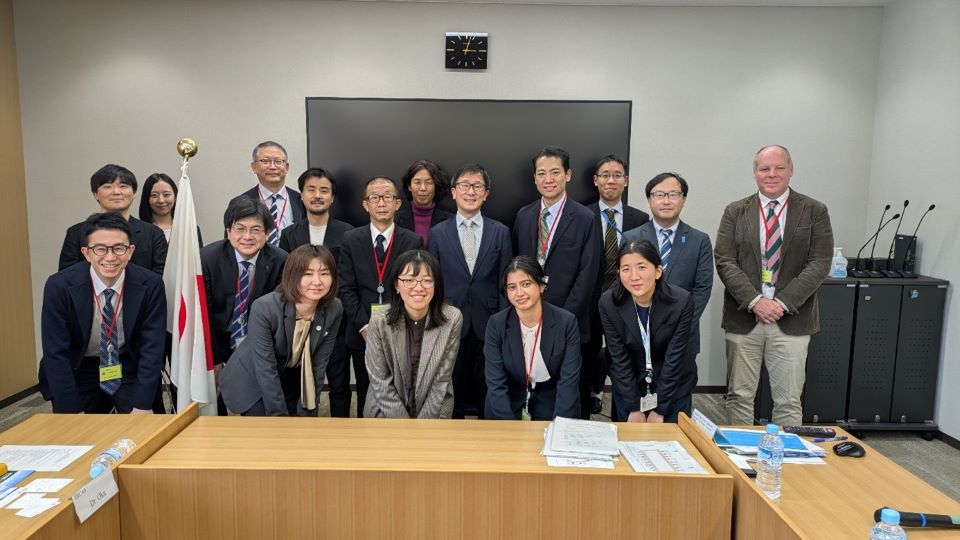
Photo 1 Group photo of participants
3. Innovative Japanese Technologies and Approaches Changing the World
At the workshop, attendants reported specific achievements and the global dissemination status of outstanding technologies and approaches originating from Japan.
[Initiatives by Private Companies]
Private Company 1: TOWING Inc. - Providing high-performance biochar ‘Soratan’
A Nagoya University-originated venture, this company developed ‘Soratan,’ which fixes useful microorganisms onto highly porous biochar. It simultaneously achieves greenhouse gas (GHG) soil sequestration and soil health improvement, promoting the decarbonization of agricultural supply chains with global companies through the construction of plants utilising local biomass.
Private Company 2: Sagri Co., Ltd. - Agricultural solutions using satellite data and AI
A Gifu University-originated startup, Sagri analyses satellite data to provide services such as agricultural plot detection, soil carbon monitoring, and paddy field water management.
Private Company 3: Ajinomoto Co., Inc. - ‘Biostimulant’ utilising AminoScience
The company practices a biocycle (resource circulation) that returns by-products from the amino acid manufacturing process, derived from crops, to farmland as fertiliser. Their biostimulant increases plant nutrient use efficiency, improves tolerance to environmental stress such as climate change, and contributes to building sustainable food systems by activating soil microorganisms and enzymes to enhance water retention capacity.
[Initiatives by Research Institutions]
Research Institution 1: International Platform for Dryland Research and Education, Tottori University
Tottori University formulated the ‘SLM Guideline’, compiling 13 validated technologies and 4 approaches. The university also developed and demonstrated various technologies and approaches, including Alternative land-use scenario mapping that presents alternative land-use and management options, a comprehensive package for community-participatory soil erosion control and dairy cow production expansion, soil improvement using PAM (polyacrylamide), and seedling growth promotion utilising soil microbes derived from local ‘Church forests’.
Research Institution 2: Japan International Research Center for Agricultural Sciences (JIRCAS)
JIRCAS developed the ‘Cut-Soiler’, a subsurface drainage technology that buries crop residues into the soil using a tractor, decreases soil salinity and contributes to increased crop yields. Additionally, the center developed the ‘Fallow Band System (FBS)’, which suppresses soil erosion in African drylands while simultaneously contributing to increased crop yields.
4. Future Potential: Deepening Private-Public Partnerships
The focus of the discussion was on how to penetrate and socially implement Japan's outstanding technologies in the field in developing countries. Active exchanges of opinions took place on highly effective themes, such as how to change the awareness and behaviour of local farmers, how to discover local needs and connect them to technologies, and how to secure funding for implementation.
In response, international organisations presented support schemes applicable to soil conservation:
- UNIDO: Encouraged to utilise STePP(external link), a database aimed at transferring excellent Japanese technologies to developing countries
- UNDP: Proposed the scaling up of initiatives from small-scale pilot projects within agricultural support for climate change response projects
- UNCCD: Encouraged to join Business4Land(external link), a corporate network working on land conservation
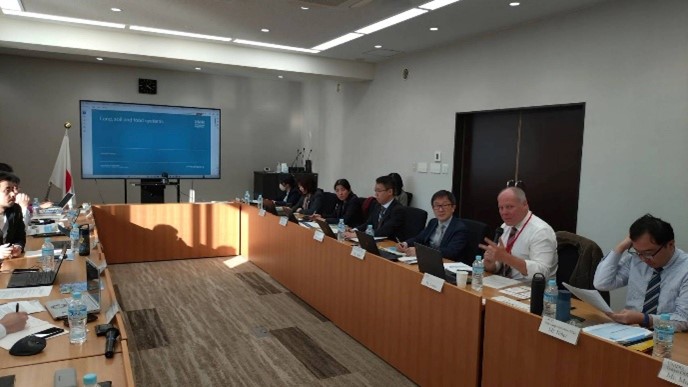
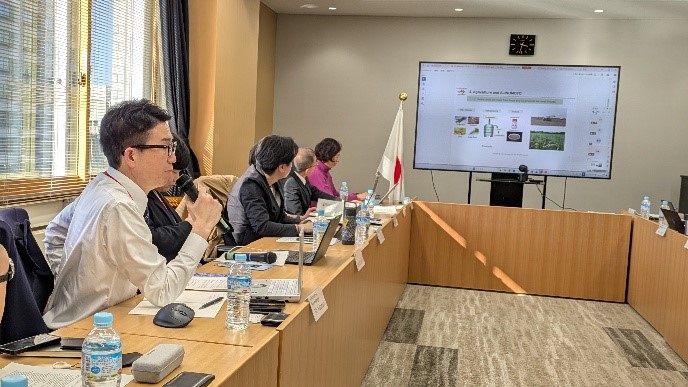
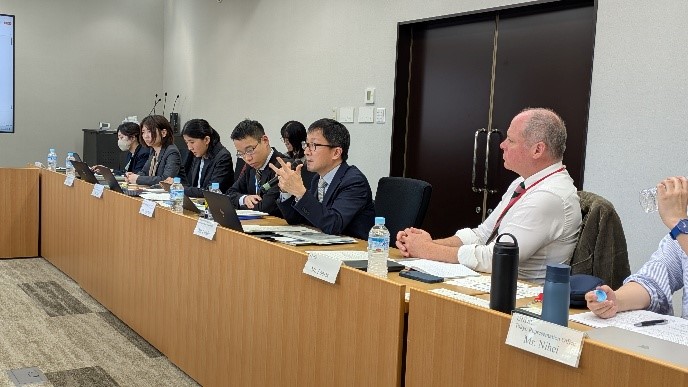
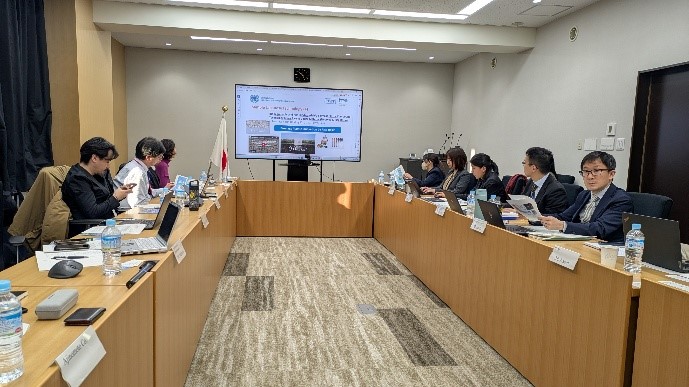
Photo 2 Discussion scene on the day
5. Actions Toward UNCCD COP17
Through this workshop, it was reaffirmed that ‘regenerative agriculture’ and ‘soil conservation’ are challenges that should be addressed not only by a single country or company but by society as a whole under a private-public partnership.
MAFF is considering participation for the first time in UNCCD COP17. Based on the outcomes of this workshop, we plan to utilise these opportunities—including exploring a joint side event on-site—to disseminate Japan's desertification countermeasures and innovative technologies and approaches to the international community. This initiative will lead to the creation of concrete international cooperation projects.
6. Related Links
- UN Convention to Combat Desertification (UNCCD) (external link)
- UNCCD COP17 (external link)
- For Japanese, click here
7. Appendix
Contact
International Strategy Division, Export and International Affairs Bureau
TEL:+81-3-6738-6155
Some of the publications on this site are in PDF.
To view them you will need to have Adobe Reader.
Please download Adobe Reader.


